
Are your 2026 NPD concepts retailer-ready?
A year in development, and retailer reviews are just weeks away.
The gap analysis is done, the insight is written up, the concept has a name, the claims are drafted, and someone has mocked up a pack.
All you need is a listing.
Spare a thought for the buyer
Their job is to earn as much as they can from a fixed and very limited square meterage of fixture. They can do that by extracting better terms from their suppliers, but by and large they would far rather do it by backing a well-crafted, disruptive concept that engages shoppers and genuinely grows the category.
That is what they are hoping to see in September. It is not, on the evidence, what usually turns up.
Circana’s Europe’s Innovation Pacesetters 2025, covering more than 75,000 launches across the EU6, found innovation volumes down 20% year on year, with just 5.2% of all CPG products qualifying as innovations. One of the lowest levels Circana has recorded.
Kantar’s UK analysis found only one launch in three drives extra sales for the overall category. The rest simply move shoppers from one product to another.
All of which gives a retailer no motivation to make space on an already crowded shelf.
You can’t afford your NPD story to die in the retailer meeting
Kantar’s 2024 analysis of more than 7,000 launches found successful propositions typically achieved 47% distribution share. Failures managed 16%.
A compelling category growth story is the key
Ehrenberg-Bass have consistently argued that 88% of brands grow by recruiting new buyers. The IPA effectiveness databank agrees: 82% of 880 papers reported growth from penetration, just 2% from loyalty.
The buyer asks a sharper version of the same question. Are these buyers new to your brand, or new to the category? Taking shoppers from a competitor product is a great result for you and a matter of complete indifference to them.


2026 may be a hard year to stand out
Retailers are hoping to see insightful, compellingly crafted concepts that grow categories.
What they are more likely to see is you and your competitors arriving with much the same ideas at much the same moment.
Virtually every innovation team now runs the same tools. Mintel for the launch database, Black Swan or Tastewise for the trend signal, a model to draft the concept. Nestlé, Campbell’s, Mars and PepsiCo are all reported to be on the same platform.
Greenbook’s GRIT report puts AI use in qualitative research at 72% of insight teams, up from 31% two years ago.
Speed isn’t the problem. The problem is what gets skipped to achieve it. Synthetic respondents are trained on what people have already said, so they recycle old material and settle towards the average — which is precisely the wrong instrument for finding the weak signals and outliers that disruptive innovation depends on.
So the question worth addressing before September isn’t whether your proposition is good. It’s what the odds are that you and your competitor walk into the same buyer’s office with variations on the same idea.
Let’s Learn from the challengers
Circana found average sales per innovation are now higher for small and medium-sized brands than for large ones — despite the majors’ vastly bigger R&D budgets.
Founders are seldom cleverer than your team. They are simply closer to the problem, because they tend to be solving their own. You cannot be your consumer, but you can still get into the room with her.
Three weeks to give your concept the consumer-honed edge it needs
McKinsey and Nielsen’s Innovation Practice data suggests optimised concepts generate 38% more revenue and are four times more likely to succeed.
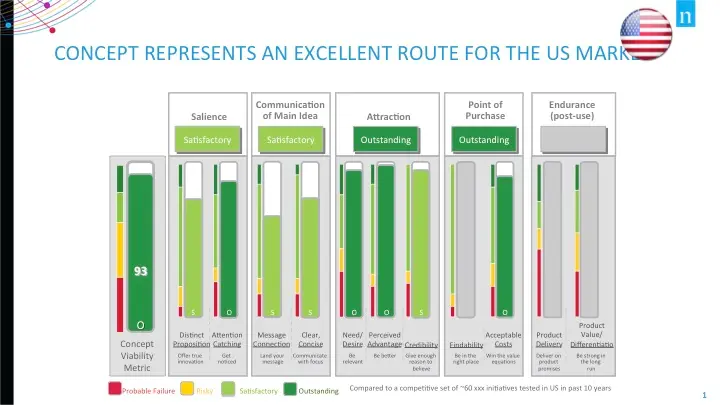
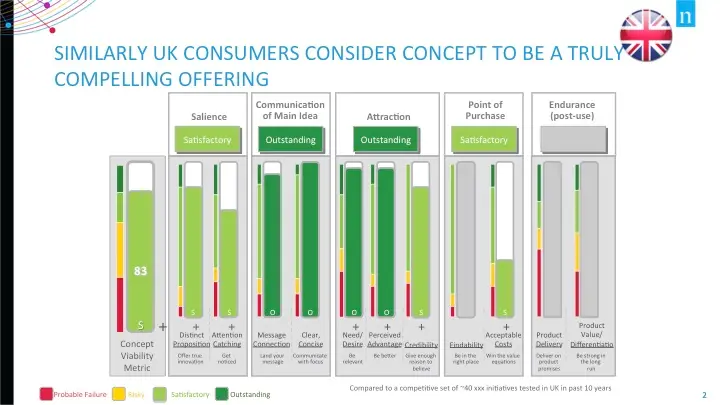
We’ve repeatedly demonstrated the truth of McKinsey & Nielsen’s fourfold success-boost data across dozens of projects over the last thirty years – including this one for Unilever, which delivered 93% concept viability in the USA and 83% in the UK.
Consumer Co-Creation will optimise your insight connection, category growth story, proposition & claims
Week One: Alignment and incrementality stress-test.
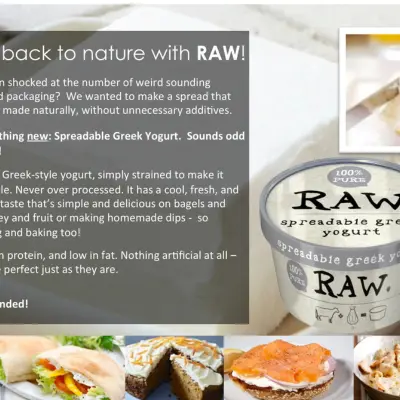
We take the proposition apart and test the growth story a buyer will interrogate.
A proposition you know the weaknesses of, before a buyer finds them for you
Week Two: Proposition co-creation. and optimisation
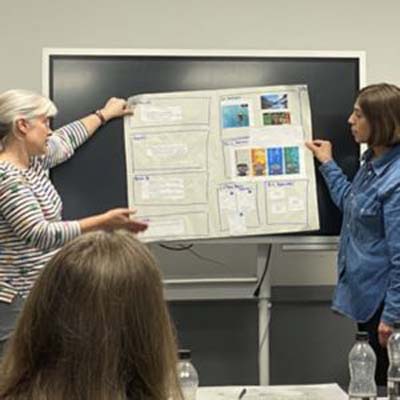
Two sessions with your target consumer. Not “do you like this?” but “what would make this irresistible?”
The language your claim is missing, in the words of the people you need to buy it
Week Three: Claims crafting and the growth story.
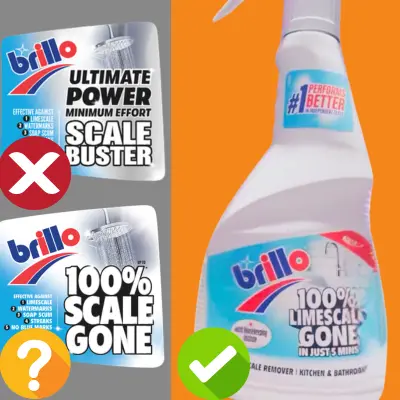
Claims rebuilt from the language that actually recurred, not the line the moderator remembered.
Claims and a category growth story your team can take straight into the retailer presentation.
AI has taken our proposition sprints from six weeks to three. It has not changed where the answers come from – the consumers themselves.
Next Steps
We’ve Got The Tools To Help Make Your NPD 4x More Likely to Succeed
However big your innovation challenge, however tight your timing, or however modest your budget … we have the agile insight, ideation & co-creation tools that will help you generate the growth you need.
If you’d like to book a fifteen-minute call to find out more: Either email us, drop us a contact request, or connect via David , Nick or Joanna on LinkedIn
We custom-build solutions for every client – that deliver brilliant results.