

No marketer can afford to ignore the growth of GLP-1s
GLP-1s are quickly becoming one of the most important forces shaping consumer behaviour. GLP-1s are changing how people eat, shop, indulge, prioritise health and spend money.
Recent UK data suggests that 9% of UK adults have used a GLP-1 medication, with the number of active users projected to rise from around 3 million today to around 7 million by 2027 as access broadens and oral formats enter the market.*
This is not just about appetite suppression
Much of the early conversation around GLP-1s has focused on a narrow question: what foods will users eat less of?
The more important question for marketers is this: How do needs, routines and spending patterns change when millions of consumers alter their relationship with food, health and their own bodies?
When appetite changes, the effects go beyond portion size.
Shopping missions change. Snacking occasions change. What ‘treating yourself’ looks like can change. Interest in nutrition, protein and wellness often increases. Confidence and self-image can shift. Spending will move out of some categories and into others
−70%
Snacks & Confectionery
−60%
Sugary Drinks
−52%
Wine
−43%
Beer
−40%
Spirits
+60%
Fresh Foods
+54%
High Protein Options
+40%
Vitamins & Supplements
+30%
Fitness
+40%
Clothing
More than 80% of people who had stopped treatment said they had maintained at least some of the dietary and grocery changes they adopted while taking GLP-1s.
For some brands, that will create risk. For others, it will create entirely new opportunities.
The biggest risk is responding too superficially.
There is already a familiar pattern being repeated. A new consumer shift appears. Headlines drive reaction. A few early examples surface. Then the market rushes to respond:
- smaller portions
- more protein
- ‘GLP-1 friendly’ claims
- a quick innovation sprint
- a workshop on what it all means
But speed without understanding rarely creates advantage.
GLP-1 users are not one homogeneous audience. Their needs will vary by health goal, treatment stage, side effects, household context, life stage, category habits and mindset.
Some may be looking for smaller, simpler eating occasions. Some may need more nutrient density. Some may want help balancing health with enjoyment. Some may be spending less on food and more on fitness, beauty or clothing. Some may be trying to manage or avoid long term health conditions such a metabolic disease or cancer. Others may be reassessing their routines more broadly.
Treating this as a single ‘GLP-1 consumer’ is lazy strategy.
Three actions marketers should take now
The opportunity for marketers is to build a much deeper understanding of the emerging need states, tensions and unmet opportunities around GLP-1 use.
1) Research with GLP-1 users to uncover the real behavioural shifts

The first priority is insight. Not just a few questions bolted onto a tracker or existing qual groups, but deep, sensitive, empathetic, focused work that gets close to the lived experience of GLP-1 use:
- how routines are changing
- how their relationship with indulgence, convenience, nutrition and confidence is evolving
- what they feel is missing from current offers
This is how you move beyond the headlines and uncover the real demand shifts that matter to your category.
2) Connect those insights to innovation opportunities with tech scouting

Insight alone is not enough. Brands need a way to translate emerging needs into practical tech-led opportunities that are both desirable for consumers and credible for the business.
- new food technology that delivers relevant propositions
- new product and pack formats that offer relevant propositions or different usage occasions
- ways of delivering personalised support or digital service layers
That is where a wider technical innovation lens pays dividends – so the support of a tech-scout can be invaluable
3) Build propositions that feel genuinely relevant to this emerging consumer reality
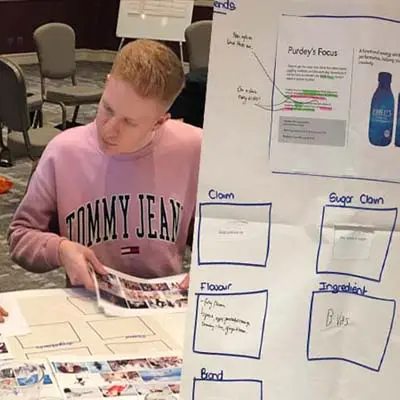
Wise brands use this moment to optimise their proposition: refine the tension within their driving insight, focus their benefits, maximise the relevance of their claims – and build a compelling category growth story to guarantee listings.
- optimising alignment of insight, proposition and presentation so users feel empowered
- Ensure claims are relevant, compelling and true
- Craft irresistible category growth stories
Concepts crafted with consumers are 4x more likely to succeed – and generate almost 50% more revenue*
What this means for innovation teams
You could just ‘park’ GLP-1 users as an ‘interesting sub-group’ and carry on with business as usual, but given there are already more GLP-1 users in the UK than vegans and vegetarians combined, that feels unwise.
Given that penetration is predicted to grow from 9% to 20% within a decade – failing to engage with and create solutions for GLP-1 users feels like a missed growth opportunity!
Next?
If you’d like to chat, please give us a call on +44 1491 411272, or connect with David , Nick or Joanna via LinkedIn
We custom-build solutions for every client – that deliver brilliant results!
. https://www.pwc.com/us/en/industries/consumer-markets/library/glp-1-consumer-trends.html
* Nielsen NIQ & McKinsey Innovation Practice data