
How to launch winning NPD when only 15% succeed
85% of NPD launches fail – and less than 3% go on to become Innovation SuperStars with turnover £50m+ per year.
The percentage won’t surprise anyone. But the fact that it’s been so consistent for over 30 years should worry us all, because it’s made us scared to innovate.
Fewer than 35% of launches by major brands are genuinely disruptive; the majority of launches are now renovations: line extensions, reformulations, pack changes and relaunches.
But the failure rate is still huge. When we have so much more science on how to do it well … why is innovation so hard?
We’ve identified five drivers of winning innovation – plus one powerful lever that will maximise your likelihood of delivering success
We analysed 30+ years’ performance data, reviewed 150+ reports and interrogated learnings from 75+ leading authorities to work out what was going on.
It quickly becomes apparent that most innovation programmes prioritise the wrong variables.
They focus on generating masses of novel ideas – whereas the secret of success lies elsewhere.
Across SMEs, who are now contributing 100% of US branded growth, and the rare large-company success – five patterns repeat:
#1
Driver One: Winning NPD resolves insight ‘tensions’ and grows categories.
Every innovation success resolves a real, felt, unsatisfied need. They don’t just set out to fill a ‘gap on the shelf’.
Consumer immersions & ethnographies, followed by insight-driven brainstorms, structured around resolving consumer tensions, can then be used to generate relevant & compelling solutions. Perhaps counterintuitively, the data suggests that relevance and differentiation are significantly better predictors of success than absolute conceptual novelty.
Ehrenberg-Bass Institute data: 88% of growing brands grew by finding more buyers through distinctiveness & mental availability, not by being new.
A well-structured proposition will address an unsatisfied need in a fresh and differentiated way – and be perceived as bringing something new to the category.
#2
Driver Two: Winning NPDs build incremental propositions that earn distribution
Virtually every successful new product tells a compelling category incrementality story – new buyers, new occasions, new need-states.
Without compelling evidence of incrementality, a margin story that protects their economics, and some form of technical insulation against copying – your NPD will die in the buyer meeting.
Kantar’s analysis of 7,300 launches found that strong propositions that went on to be successful innovations achieved 47% distribution share. Failures: 16%.
If your innovation cannibalises your existing lines, re-jigs competitive share or won’t grow the category – the buyer will spot it and the listing won’t follow.
#3
Driver Three: Differentiated propositions & compelling claims generate engagement
Differentiated propositions have the power to tap into consumers’ underlying motivations and generate genuine engagement – whereas compelling, single-minded claims, connected back into the consumer tension, have the power to bring your brand-story to life and convert awareness into trial
The key is not marketing language, ot category language, but ‘human’ language. – and smart innovators will quickly recognise the powerful role consumer co-creators can play.
Winners achieve 5–6x more trial in the first 90 days.
The difference between a concept that fails and one that sells: compelling, specific, believable claims expressed in language a consumer would use themselves.
#4
Driver Four: Propositions that deliver their performance claims are 15x more likely to succeed
Strong propositions plus compelling claims might gain distribution and deliver trial, but they don’t guarantee repeat purchases – only genuine product satisfaction will do that.
Rather than grossly over-specifying the product, and potentially building in costly, unnecessary features, the secret is to identify what consumers really care about at the insight & co-creation stage – then build the optimum propositions and optimum products to match
Nielsen BASES: Propositions that deliver on performance claims are 15x more likely to succeed in market.
Optimised propositions don’t just gain loyalty and generate trials; they also achieve higher levels of satisfaction and repeat rates.
#5
Driver Five: Winners invest consistently – and are committed to the long game
Data shows that excess share of voice early in Year One boosts trial – whereas brands that ‘hold back’ and wait for trial to build organically before committing support, seldom thrive.
It also shows that winners separate from losers in Year 2. When the power law kicks in: the #1 launch survives because it gets continued investment. #3 & 4 die because nobody fights for them.
Circana’s data suggest: the “Rising Star to Superstar” upgrade happens as distribution bottlenecks clear, trial converts to repeat, and awareness compounds.
If your business doesn’t truly believe in your insight, proposition, claims and storytelling/comms sufficiently to guarantee a two-year investment – you’re probably better off not launching at all.
The five drivers point to one inescapable conclusion: novel product ideas are significantly poorer predictors of success than deep insights & well-structured, differentiated propositions
However, most blue-chip innovation programmes skimp on deep insight, lionise the brainstorming or ideation phase – and frequently skip the proposition optimisation phase altogether, in favour of investment in design and comms.
So, perhaps it isn’t so surprising that 85% of new product launches fail?
So, what is this powerful lever that helps you avoid the fate of the failing 85%?
It’s Consumer Co-Creation: That optimises your insight connection, category growth story, proposition & claims
We’ve repeatedly demonstrated the truth of McKinsey & Nielsen’s fourfold success-boost data across dozens of projects over the last thirty years – including this one for Unilever, which delivered 93% concept viability in the USA and 83% in the UK.
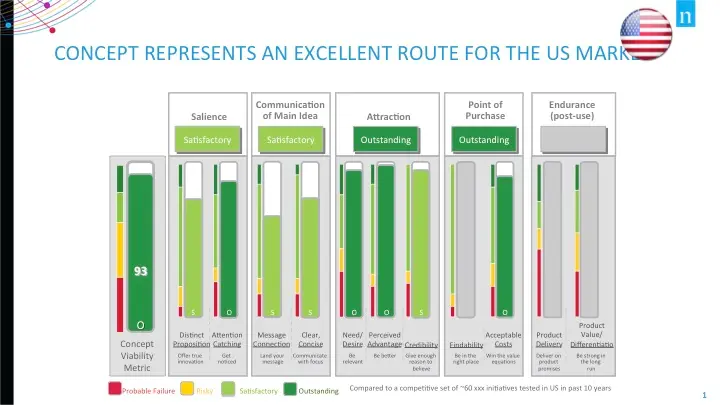
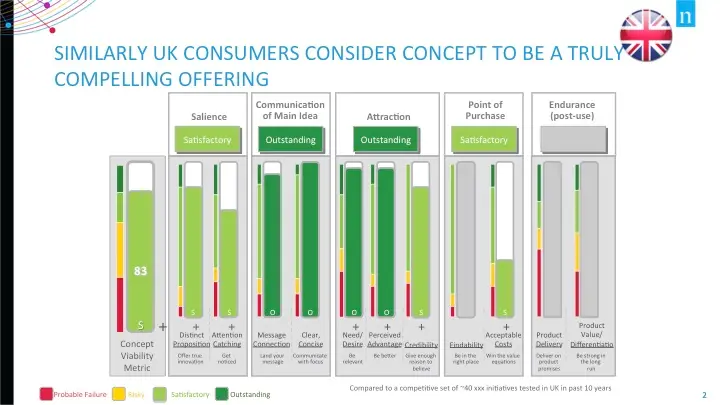
We’ve been helping our blue-chip clients create optimised, insight-driven power-propositions for 30+ years …
Deep, empathetic,
consumer insights

Insight optimisation isn’t about gathering more data. It’s about asking the consumer one more time whether we’ve got it right, or only nearly right. We pair depth interviews, ethnography and behavioural segmentation with AI tools that scale the synthesis, sharpen the pattern recognition, and bring segments to life as workshop avatars. The work that builds the proposition still happens in the consumer’s kitchen.
Unlocks unmet consumer needs + builds the category-growth story to secure distribution
Differentiated proposition
& compelling claims
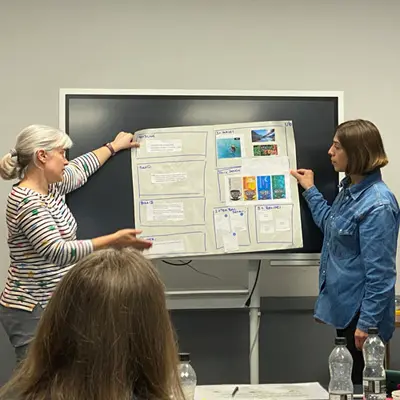
This is where the 4x multiplier is built. We run category-growth workshops with live AI-generated stimulus, semantic landscape analysis as routine pre-work, and structured co-creation sessions that turn “interesting” propositions into irresistible ones. The optimisation conversation between humans and consumers stays human. The stimulus that fuels it is now carefully crafted in advance and evolved, live, in the room.
Builds the unique brand story + generates the trial that determines survival
Commitment to drive trial & support into Year Two
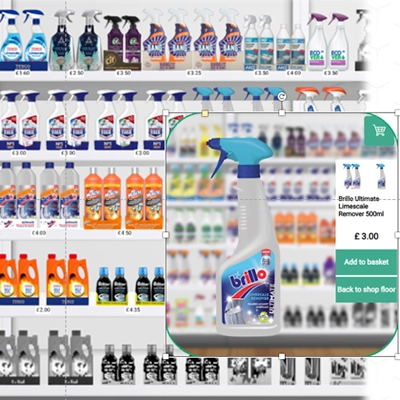
Our job is to send the strongest possible proposition across the start line — pack, claim, price and story stress-tested before the launch budget gets spent. We combine BASES-style simulation, visual attention prediction, and pre-mortem and pre-retrospective workshops to find every weakness we can. Year Two commitment is yours to deliver. The proposition that earns it – is the one we create, craft and finesse in collaboration with you
Commitment to generate trial + Year 2 spend to convert a Rising Star into a NPD Superstar
Optimisation isn’t testing. It’s crafting. It’s the difference between asking consumers “do you like this?” and collaborating with them to identify: “what would make this irresistible?”
McKinsey and Nielsen’s Innovation Practice data is unambiguous: optimised concepts generate 38% more revenue and are four times more likely to succeed than unoptimised ones.
The lever that changes the odds: optimised propositions are 4x more likely to succeed
For 30 years, we’ve helped blue-chip innovation teams craft winning propositions.


Next Steps
Send me the analysis
The data, the sources, and two diagnostic tools — the Proposition Stress-Test and the Innovation Mix Audit. No pitch, unless you want one.
Book a 15-minute review
We’ll map the five drivers onto where you are now.
If it’s useful, we’ll talk further. If not, you’ll still have the framework.
We’ve Got The Tools To Help make your NPD 4x More Likely to Succeed
However big your innovation challenge, however tight your timing, or however modest your budget … we have the agile insight, ideation & co-creation tools that will help you generate the growth you need.
If you’d like to chat, please just respond to the email – or if you’d like to check us out, connect via David , Nick or Joanna on LinkedIn
We custom-build solutions for every client – that deliver brilliant results!